How to Remove Swirl Marks by Hand (No Machine Polisher Required)
Swirl marks come from bad wash habits, not bad luck. Here's the realistic hand-correction process, its limits, and how to stop new swirls from forming.
Disclosure: This article contains affiliate links. If you buy through them we may earn a commission at no extra cost to you.
Swirl marks are the fine spiderweb of scratches that show up under direct sun or a garage light, usually after a wash. They are not random — they are almost always caused by dragging grit across the clear coat with a dirty wash mitt, a drive-through brush, or a towel that picked up dirt from the last panel. The good news: light swirling can often be reduced by hand. The honest news: hand correction has a ceiling, and knowing where that ceiling is will save you hours of rubbing in circles for no visible result.
Why swirl marks happen in the first place
Every wash mitt, sponge, or microfiber towel picks up grit as it moves across paint. If that grit isn't rinsed away — via the two-bucket method, a pressure rinse, or a fresh mitt per panel — it gets pressed into the clear coat on the next pass. Automatic car washes with brushes are a major contributor, since the same brush touches hundreds of cars a day without being fully decontaminated between them. Per most detailing references, swirl marks are technically thousands of shallow, overlapping scratches in the clear coat layer, not surface dirt — which is why they don't wash off and why polish, not soap, is what actually addresses them.
No spam. Unsubscribe anytime.
What hand correction can realistically achieve
A dual-action or rotary machine polisher works by combining mechanical abrasion with speed and consistent pressure — something a human hand struggles to replicate for an entire panel. By hand, you're relying on arm pressure and pad texture alone, so hand correction is best suited to:
- Light to moderate swirling, not deep scratches you can catch a fingernail on
- Single panels or trouble spots (hood, trunk lid, door edges) rather than a full car
- Owners who want a visible improvement, not a total factory-fresh reset
Owners consistently report that hand-applied swirl removers can meaningfully improve clarity and gloss on lightly marred paint, especially darker colors where swirls show most. But per most product literature, heavier oxidation or deep clear-coat scratching typically needs mechanical polishing to fully level — hand pressure alone often can't generate enough consistent cutting action across a large area.
The hand-correction process, step by step
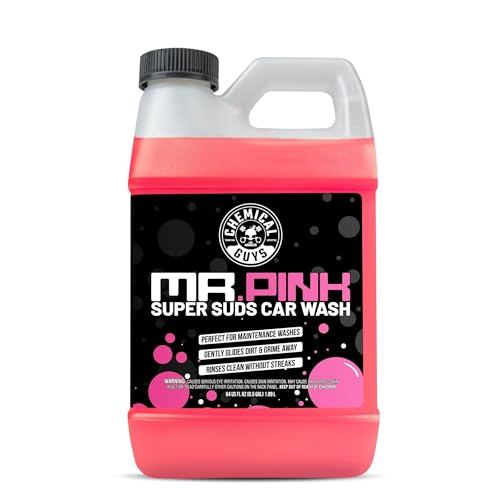
1. Wash and decontaminate first. Polishing over embedded dirt just grinds new scratches in. Start with a proper wash — Chemical Guys Mr. Pink Car Wash Soap is a pH-balanced foaming soap that won't strip existing wax while you assess the paint. Check price on Amazon →
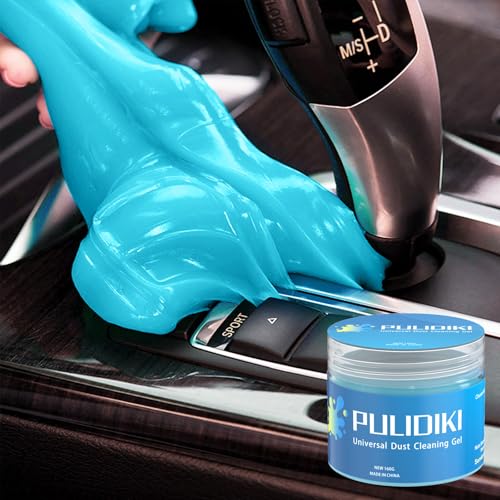
2. Clay or gel the surface. Run a clay bar or a cleaning gel putty like PULIDIKI Car Cleaning Gel over the panel to pull embedded contaminants out of the clear coat before polishing. Skipping this step is one of the most common reasons hand polish "doesn't work" — you're polishing over grit instead of removing it.
3. Work small sections. Divide the panel into roughly 2-foot by 2-foot sections. Apply a dime-sized amount of a swirl-remover polish (not a wax or all-in-one) to a foam or microfiber applicator pad.
4. Use overlapping straight-line or cross-hatch passes, not tight circles. Circular motion by hand tends to concentrate pressure unevenly and can introduce new marring. Apply firm, even pressure and work the product until it starts to haze, then wipe with a clean microfiber towel.
5. Inspect under direct light, ideally sunlight or a dedicated inspection lamp — interior garage lighting hides most swirl marks. Repeat on stubborn spots, but avoid over-working one area; clear coat is a finite, thin layer.
6. Seal the correction. Once you're satisfied, lock in the result with a spray sealant or ceramic spray — see our beginner's guide to ceramic spray coatings for how to choose one and apply it correctly.
Table: hand correction vs. machine polishing
| Factor | Hand correction | Dual-action polisher |
|---|---|---|
| Best for | Light swirls, single panels | Full-car correction, moderate scratching |
| Time per panel | 15–30 minutes | 5–10 minutes |
| Physical effort | High (arm fatigue) | Low to moderate |
| Typical result on heavy swirling | Partial improvement | Fuller correction |
| Upfront cost | Low (polish + pads) | Higher (polisher + pads + polish) |
Preventing swirl marks from coming back
Correction without a change in wash habits is a losing cycle — the same swirls return within a wash or two. The fix isn't a product, it's a method: the two-bucket wash method rinses grit off your mitt before it touches the paint again, which is the single biggest lever for keeping paint swirl-free between corrections. Pair that with a foam gun pre-rinse, like the Chemical Guys TORQ Foam Blaster 6, so most of the loose grit is gone before a mitt ever touches the car. Check price on Amazon →
Also worth dropping: automatic brush washes, drying with anything but a clean, dedicated microfiber towel, and wiping dust off with a dry rag. Each of those reintroduces the exact grit-dragging problem that caused the swirls in the first place.
The bottom line
Hand correction is a legitimate, budget-friendly way to visibly reduce light swirl marks, especially on a hood, trunk, or a few problem panels — just go in with realistic expectations about what arm pressure alone can undo. If your paint is heavily swirled or has deeper scratches, a dual-action polisher will get you further with less effort. Either way, the correction only sticks if you fix the wash habits that caused the swirling: two buckets, a foam pre-rinse, and clean, dedicated towels per panel. Buy the polish for the fix, but budget for the wash kit — that's what keeps you from doing this again next month.
Affiliate Disclosure